


-
THE ART OF MOTHER OF PEARL INLAY: WHERE AESTHETICS AND CRAFT MEET
Mother-of-Pearl Inlay Art is a Turkish art in which shiny materials such as shell or mother-of-pearl are engraved on materials such as wood, metal or ivory to create decorative patterns. This art, which became especially popular during the Ottoman period, has been preserved for centuries and has survived to the present day. The art of mother-of-pearl inlay not only represents an aesthetic pleasure, but is also an example of how Turkish culture is characterized by refinement, patience and craftsmanship.
TECHNIQUE AND MATERIALS
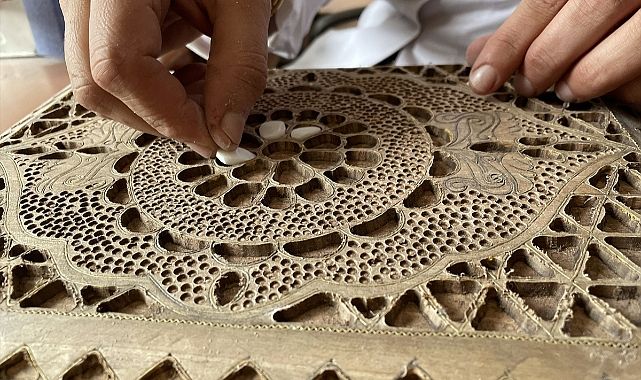
In the production of Mother-of-Pearl Inlay, mother-of-pearl obtained from wood species such as walnut, ebony and sea shells is generally used. The choice of material varies according to the product to be processed. First, patterns are drawn and then pieces of mother-of-pearl suitable for these patterns are cut and placed.
CULTURE AND ART IN TRANSIT
Mother-of-Pearl Inlay has left its traces in a wide geography from Anatolia to the Middle East, from the Balkans to North Africa. Since the Ottoman period, palaces, mosques and mansions have been adorned with impressive examples of this art.
CRAFTSMANSHIP AND CRAFT
The making of mother-of-pearl inlay requires a high degree of skill. The precision of the material, the complexity of the pattern and the perfection of the mother-of-pearl pieces inlaid show the difficulty and originality of this art. Since the works created in mother-of-pearl inlay are usually miniature in size, the attention to detail becomes even more important.
MOTHER-OF-PEARL INLAY: WHAT DOES IT MEAN TODAY?
The art of mother-of-pearl inlay continues to be practiced in modern Türkiye. Art galleries, museums and handicraft markets promote and keep this traditional Turkish art alive. A new generation of artists aims to carry this art into the future with a modern touch.


ARTISTIC EXPRESSION OF CULTURAL PERMANENCE
As a reflection of Turkish culture and aesthetics, mother-of-pearl inlay is a recognized art form not only within the borders of Türkiye but also around the world. Each piece created reflects the richness of Turkish culture, its respect for detail and its deep connection to art. As an example of timeless beauty and craftsmanship, Sedef Inlay is a shining star of Turkish cultural heritage.