


-
PIRI REIS MASTER OF MAPS, CAPTAIN OF THE SEAS
Piri Reis was a legendary navigator and cartographer who lived in the Ottoman Empire in the 15th and 16th centuries. His most famous work is the world map he drew in 1513, which includes the newly discovered American continent in the West. Piri Reis is one of the most important figures not only in Ottoman but also in world history for his work in maritime history and cartography. In addition to his maritime skills, Piri Reis lived a life intertwined with science and art, and made significant contributions to Turkish culture and the history of science.
MASTER OF THE ART OF MAPPING
Piri Reis had a unique talent for cartography. His maps were extremely detailed and accurate for that period. In particular, his world map of 1513 showed the coasts of America, which was new to the Western world, in detail for the first time. In addition, this map brought together the maritime knowledge of the period, drawing on local sources and personal experience.DOYEN OF THE MARITIME INDUSTRY
Piri Reis, whose maritime skills were not limited to drawing maps, also played an important role in the Ottoman navy. He served as a commander in various expeditions and collected the experiences he gained during these expeditions in his book 'Kitab-ı Bahriye'. This book is an important source for maritime history and increased the Ottoman maritime capacity.CULTURAL AND SCIENTIFIC CONTRIBUTIONS
Piri Reis contributed to Turkish culture not only as a navigator and cartographer, but also as a writer and scientist. His works such as 'Kitab-ı Bahriye' have been important references in the field of maritime and geography and have left deep traces in Turkish cultural and scientific history.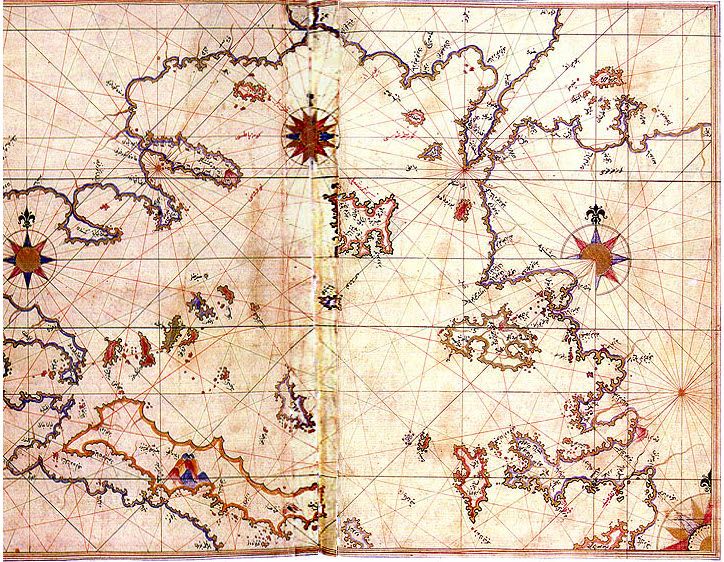


REDISCOVERY OF THE WORLD
Considering its meaning and impact today, Piri Reis' contributions are not just a thing of the past. His traces and influence are still present in modern cartography and navigation. He is considered one of the windows of Turkish cultural heritage to the world. Even though Piri Reis lived five centuries ago, he is a Turkish hero with an influence and importance that continues to this day. By pushing the boundaries of the seas and cartography, he had a lasting impact on Turkish culture and the history of science, and inspired generations after him.